



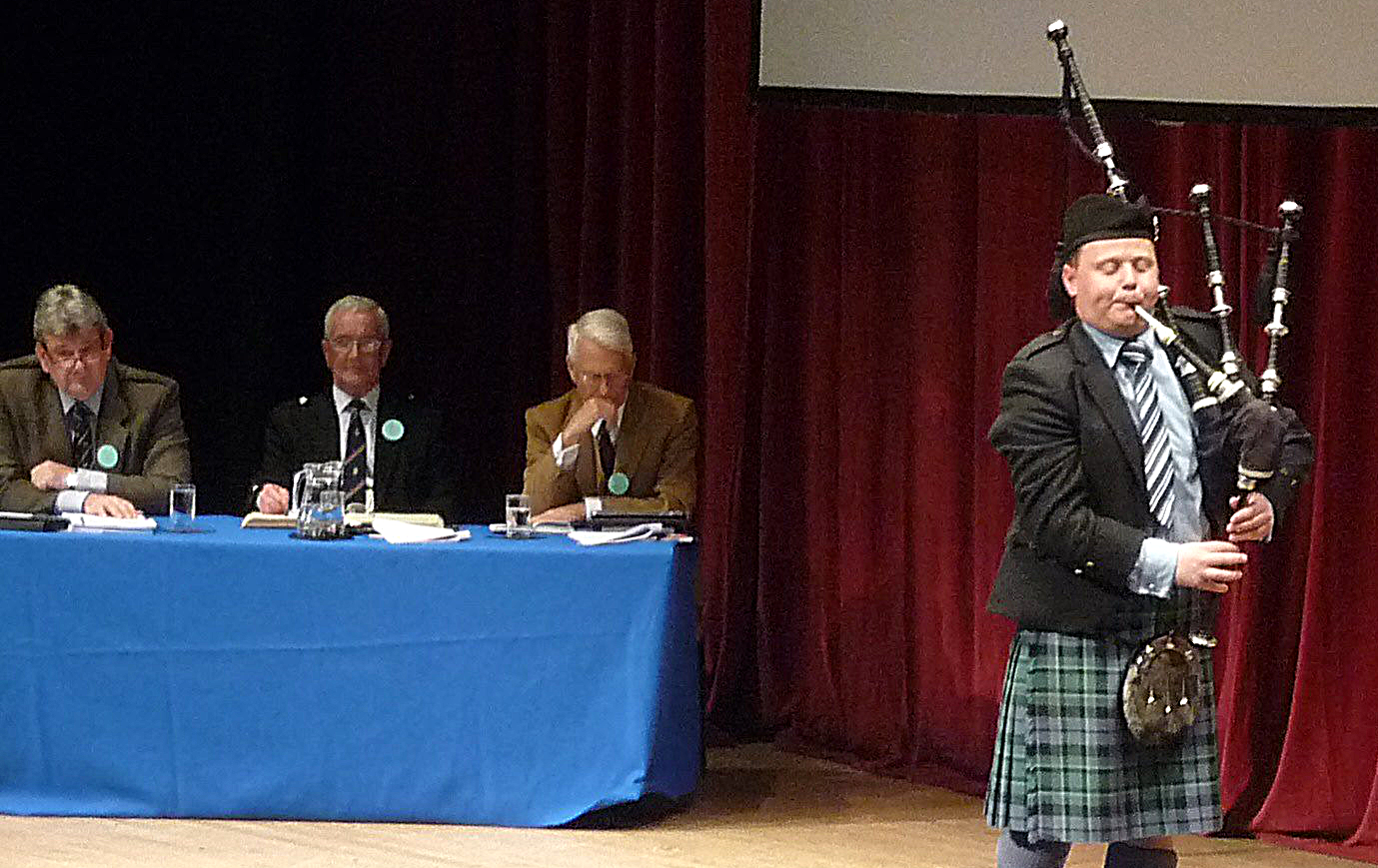
In 2023 the Piobaireachd Society recommended a long list of 50+ set tunes for the senior piobaireachd events at Oban and Inverness. The five year experiment ends next year and assessment has begun.
When launched the idea of a comprehensive list of tunes thought suitable for this level of competition was popular with audiences. They were guaranteed a raft of classics as they took their seats at Corran Halls or Eden Court.
By Robert Wallace
It was popular with pipers too; most of the senior guys had a good command of at least a dozen or so pieces on the roster. No learning of obscure pieces from Books 10-15 as in previous years.
From the Society’s Music Committee point of view it reduced the workload a little – no annual head scratching over what to propose for the Clasp or the Senior Piobaireachd, the two singularly most important competitions in world piping.
As time has gone on several downsides to the long list have emerged. Firstly, numbers. Entries to the senior events have almost doubled (underlining my point in paragraph three) giving major headaches to promoters. Most of the tunes are lengthy. Entries close to 30 meant, on paper, 12 hours from start to finish.
Inverness acted this year to offset the issue with two heats and a final in the Clasp. Oban toughed it out and were fortunate to have several call offs.
Second, the current system means that a piper cannot submit a tune he has played in these contests for five years. Pieces submitted in 2023 can be put forward again in 2028 and the cycle of ‘pot boilers’ begins again. Maybe ten years would be better.
Third, and one I’m not too concerned about, the new Gold Medallist has an advantage. He or she has the full list of ‘top of the pops’ to select from.
Fourth, the inclusion of modern tunes on this list. Unlike the traditional repertoire, there is no interpretive back story to these tunes, no stylistic preference that might split a bench. Pipers know this.
Get the pipe right, the fingers crisp, and keep the tune moving and what’s not to like? No judge is going to spout fourth on the way variation 1 was played or the way Robert Reid handled the ending of such and such a line.
Moreover, is there anything in the modern canon which makes demands on the interpretive skill of the piper in the way the Bull, the Red Hand, or the End of the Little Bridge does?
Style preference: John Garve – MacKay or MacDonald?; Scarce of Fishing – Urlar doubling or Var 1?; MacDonald’s Salute run down or long B?; Bells of Perth urlar, long low G or short? I could go on; I will.
Praise of Morag round off Var 1 or pulse it along; swing that pendulum in Var 3 of Antrim or handle it stately fashion; Fingerlock – pushed on or spread pulse? Children – 3/4, 4/4, 12/8?

Modern tunes confront the judge with none of these dilemmas, and thus an important dynamic is missing from the adjudication process. Pipers know this. That is why they readily submit, and hope to get, the Phantom Piper, the Son’s Salute, the Queen’s Ferry – that and the fact that these are fine pieces of music.
Yes, damn fine; so please don’t run away with the idea that I am agin the modern tunes. Far from it. Forty years ago I played John MacLellan and John MacKenzie’s compositions on the BBC.
We need to give our composers a platform for their work not just in recital but on the boards too. But to get a level playing field for the competitor these tunes need to be pitted one against the other, not against the canon from two, three, or four hundred years ago.
It is this mix that I am against. The traditional tunes have been with us for centuries and in that time have diverged – such is the way with all traditional and classical music – and judge’s have their preferences.
In 100 years there will probably be a better way of handling the modern tunes than we know of today, some tweak or twist to a phrase or passage no one has yet thought of. That is the nature of all music and mankind’s interpretation of it.
Let’s have more of it, but when we are doling out the top awards we must make these life changing competitions as fair as possible – and that means every tune and performance being exposed to the four tenets of adjudication: bagpipe tonality, quality of technique, true reflection of the score, musical appreciation of expression and of differing style.