


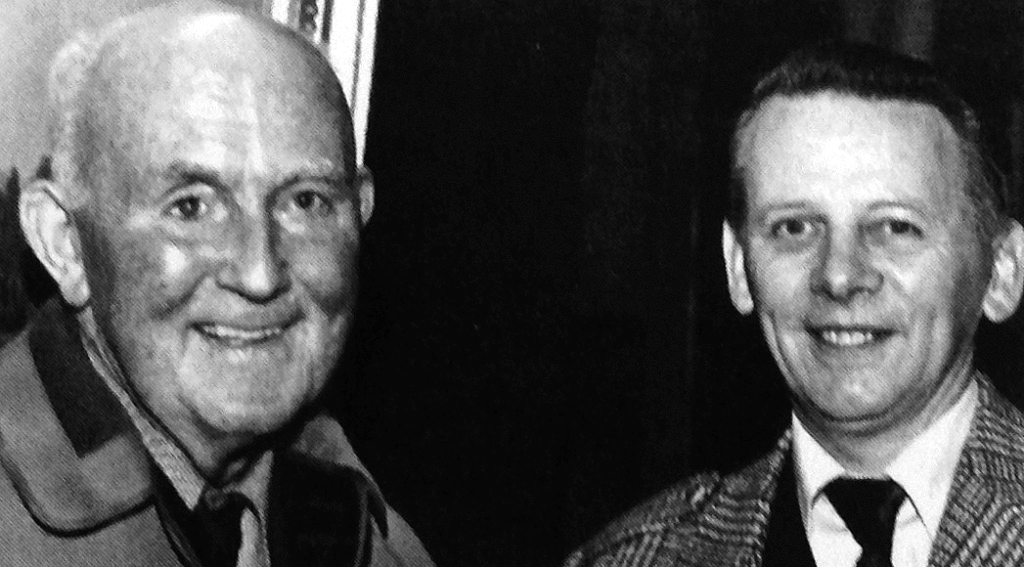
I want to double down on one of my comments in Brad Davidson’s report on my workshop in Ontario. Any rule or legislation in piping which discourages teaching, directly or indirectly, should be deplored by all right-thinking persons.
Judging and teaching should not be seen as mutually exclusive, yet we now have experts, proven winners at the top of our business, who have turned their backs on the latter in favour of the former.
Why is it that Scotland, over the decades, has produced some of the best pipers in the world? Because the senior, gifted players were prepared to share their knowledge with the up-coming generation.
This was understood by Donald MacLeod. It was understood by John MacFadyen. And by Captain John MacLellan. And Jimmy McIntosh, Donald MacPherson, Andrew Wright, Tom Speirs, Iain MacFadyen …. the list goes on.
Without teaching, the assembly line of excellence will dry up. We see signs of it all around us today with pipers showing, at best, a patchy understanding of the basics of timing and phrasing, relying on good pipes and fingers to see them through. We hear it in both ceòl beag and ceòl mòr.
A way has to be found to encourage the top people to judge at the highest level and to teach those who aspire to play there.
277 Argylls TA
Correspondent Nick Taitz: ‘Yes that is Roy Blevins in the picture of the 277. He was only 16 when they won [the Worlds in Belfast 1962, P/M John Weatherston].
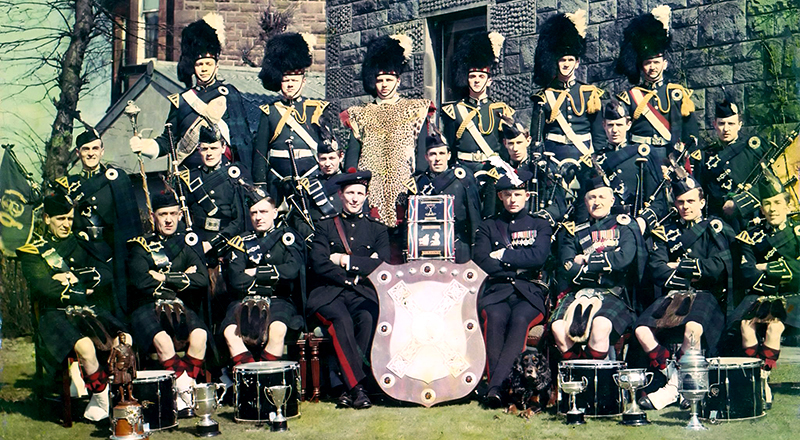
‘Another funny story about him, he was once announced at a South African Games, where he had won the solos, as Mr R B Levin. This became one of his nicknames from then on.
‘He had a very nice set of silver and ivory Hendersons from the Greig Sharp Henderson days. Looks like Roy in the picture, second row, last on the right.’
Perthshire Games
Organiser Jen Mackintosh: The Perthshire Highland Games Association (PHGA) is re-introducing the Confined to Perthshire Junior Piping League for the 2026 season. In summary, to be eligible to compete in the league, a piper must be:
- Aged 18 or under as at first PHGA games of the season (Atholl Gathering, 24th May 2026)
- Born in Perthshire, or currently living in Perthshire, or living within five miles of a PHGA member games, or a boarding pupil at a school in Perthshire
Points will be awarded for the highest placement in competition. Should there be no junior event, then prizes awarded in open competition will count. This league will not affect individual games established competitions which will run as normal.
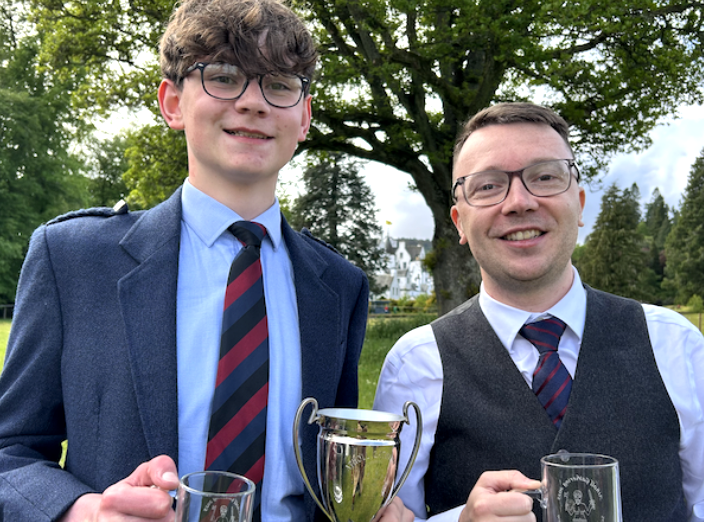
At the end of the season, awards and monetary prizes will be presented to the top three competitors. Further details can be found at www.perthshirehighlandgames.com under Rules tab or contact Jen at PHGA.Piping@outlook.com
Similar leagues for highland dancing and heavies have run successfully for a number of seasons, so it would be good to afford young pipers the same opportunity and challenge.
Strathendrick Boost
Strathendrick Pipe Band has received a £1,000 donation from Ayrshire-based wood pellet and briquette producer, Land Energy.
Paul May, the band’s bass drummer, said: ‘This donation will help towards travel costs this year and our intention is to take all our youth members to the last competition of the season at Rothesay where they will have the chance to march down the street with the full band, hopefully whilst holding a trophy.
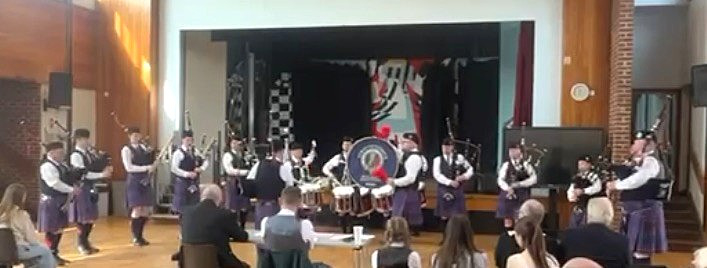
‘Keeping a pipe band running is an expensive business, and we rely on fundraising and donations to pay for instruments, uniforms and travel. The Strathendrick Pipe Band Association is both a teaching and a competing band, and we have children and young adults from all over Glasgow, Stirlingshire and Dunbartonshire in attendance.’
The band, based in Blanefield, north of Glasgow, was formed just after World War II by demobbed Home Guard members. David Bone, Communications Officer at Land Energy, said: ‘As a company, we have sponsored various initiatives over the years and are proud to support the Strathendrick Pipe Band Association with this donation.’
‘Redundant’ A
Writing in the Oban Times in July 1929, Seton Gordon declaimed: ‘In the widely read columns of the Oban Times, we have of late been reading with pleasure the correspondence on what has become known as the ‘redundant A’.
‘May I suggest that you, sir, should approach the most celebrated half dozen pipers of the present age, and ask them to inform your readers whether this so-called ‘redundant A’ in taorluadh and crunluadh is, or is not, played.
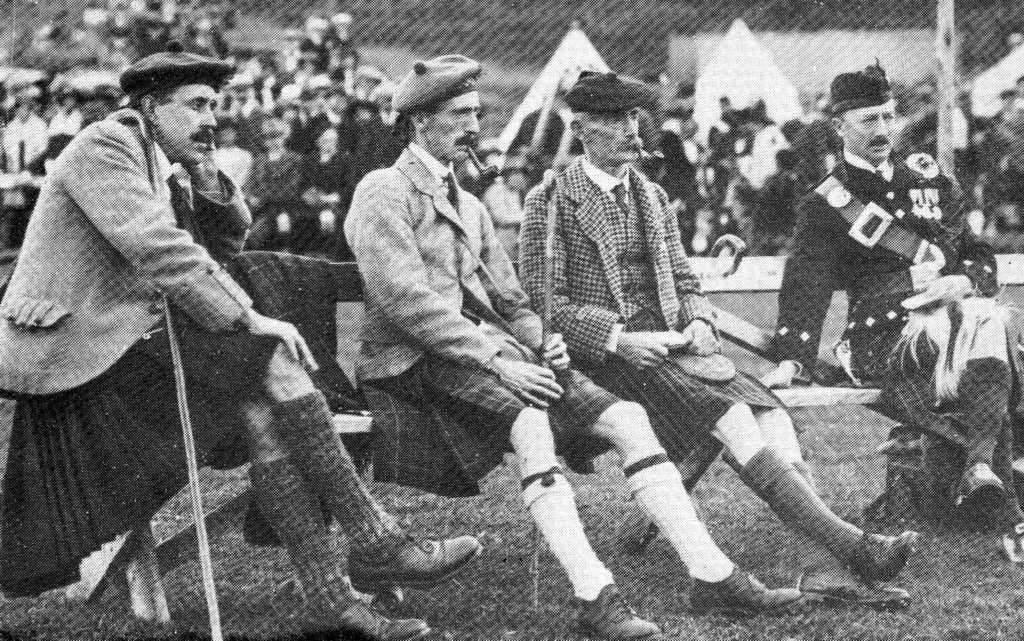
‘Presumably if none of them play it the matter is set at rest. If all of them play it the matter is likewise set at rest; and only if some of them play it, and others do not, will any doubt remain on the subject.
‘I suppose that most pipers would place the following amongst the best six pipers of the day (now that unhappily George McLennan has passed away): Pipe Major John Macdonald, Inverness, Pipe Major Robert Reid, Glasgow, Pipe Major William Ross, Edinburgh Castle, Angus MacPherson, Invershin, or his son Malcolm MacPherson, Pipe Major John MacDonald, Scots Guards, Pipe Major William Gray, Glasgow, John MacDonald, Govan Police.
‘Let them tell us, and overseas readers of the ‘Oban Times’, what they have learned from the old masters, so that the matter may be decided beyond dispute.’
A superb digital book of pipe music… click on pic to order

Order by clicking on picture…