

This article is from the Oban Times of early September 1981. It is by Alfred Morrison their piping correspondent at the time. Alfred, affectionately known as ‘old Fred’, was the father of the Gold Medallist and bellows piper supreme, ‘young’ Fred Morrison. Alfred was a native of South Uist. It was there as a young man he received his piobaireachd tuition from visiting instructor RB Nicol, one of the Bobs of Balmoral. Nicol was continuing the work of others such as John Macdonald, Inverness, and Willie Ross. These teaching tours were sponsored by the Piobaireachd Society…..

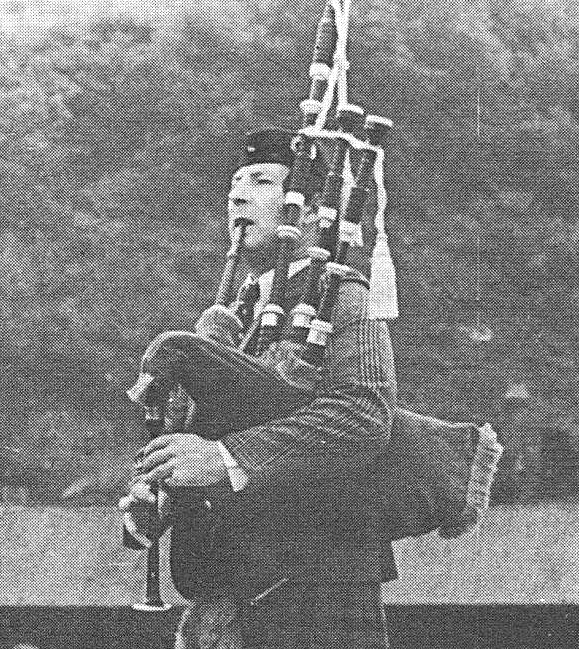
Oban was bathed in sunshine as the Gold and Silver Medal piping competitions got underway. The Gold was held in the Corran Halls whilst the Silver went on in the Dunollie Halls. This piping competition, one of the most prestigious in the world, is becoming more international every year.
There were four entries from New Zealand, five from Canada, five from the United States, one from South Africa and one from France.
It fell to Colin Drummond to start proceedings in the Gold Medal contest. He was asked to play the End of the Great Bridge. He had a well-tuned pipe but his D note was rather sharp. His ground was somewhat rushed owing possibly to nervousness. In his last line of the ground he sounded the low A before the grip in the last bar too much and this unbalanced the whole line.

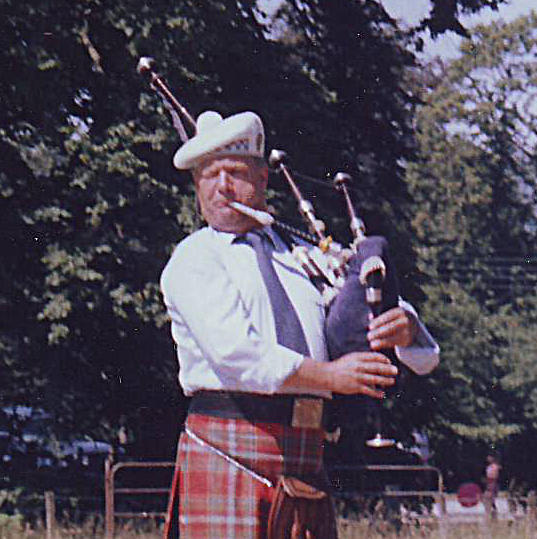
In his variations he was cutting the low As too much and he was thus inclined to lose the lament. His taorluath a mach was much too fast. In the crunluath a mach went on to the final E in his emphasis instead of the thermal note B which seems to be a common mistake. Yet on the whole it was a competent tune, well fingered, and he set a good standard.
Next on the platform was Duncan Watson of the Grampian Police. He was requested to play the Prince’s Salute. Duncan seemed to be affected by a bout of nerves as he began to play the ground so jerkily he chopped the very first phrase and the ground became very uneven with little flow. In the suibhal he was cutting the melody notes along with the initial note A. He had chokes in his tune and his crunluath a mach was rushed. However he managed to complete his assignment.







He was followed by Donald Bain from New Zealand. Donald is a former winner of the Gold Medal at Inverness. He was given the King’s Taxes to play. He had a melodious pipe. His first line was rather slow and in the second line he went completely astray but whether he realised this or not, he carried on with his tune. On the whole the tune lacked rhythm as it was much too ponderous. His crunluath finish was well-fingered.
Sergeant John Wilson of the Strathclyde Police, also a former winner of the Gold Medal at Inverness, came on with his pipe already in tune and proceeded to play A Flame of Wrath for Squinting Patrick. His ground was melodious and well phrased. His variations were perfectly timed but he could have put much more of the ‘wrath’ into this part of the tune. In the crunluath he was hanging on to the final E and this crunluath is a standard breabach. He had a slight error at the end of the first variation. However this was a good tune on a robust pipe.
The next player was Ed Neigh from Ontario. Ed is a seasoned competitor and as always his pipe was good. His tune was Black Donald’s March. He rested too long on the low As in the ground, another common error and this gives the tune the semblance of a lament. He was guilty of the same error in the variations. His execution throughout was good but the tune lacked the force it requires.

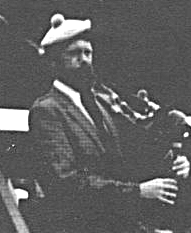
Tom Speirs, last year’s Gold Medal winner at Inverness, was next in order of play and he was given the Gathering of the MacNabs. He had a good pipe and although his ground was somewhat square, it was well phrased and fingered. Tom, playing safe, delivered a competent tune well executed but missing the light and shade that would have made it a first class performance.
Dr Jack Taylor from Aberdeen followed him to play A Flame of Wrath. His pipe was sweet and his ground was perfectly phrased and timed. Jack managed to inject the wrath into his variations and this tune was shaping up to be a good one. His crunluath finish was well executed and he played it as it should be – as a standard breabach. This was one of the good tunes of the day.
- To be continued…..

Classic Piobaireachd (Vol.3 M-Y): Lessons on Great Tunes
Another batch of the great tunes from the ceol mor canon. As before, each tune is played in full, without interruption, on the practice chanter by piobaireachd Gold Medallist Robert Wallace. This means that the student can play along whilst following the music and learn the subtle phrasing and expression so important in this music. There is no assertion that this is the only way to play these tunes. Need sheet music? All tunes available from the Piobaireachd Society shop https://www.piobaireachd.co.uk/shop