
There has been considerable response to Colin MacLellan’s recently published proposal to end the problems associated with judging and teaching which continue to plague the solo piping world. The reaction has been overwhelmingly positive.
Colin has been the recipient of several messages of support but wishes to clarify one aspect of the proposal which may have been misunderstood and adds further comment:
‘Since the publication of my judging proposal it has been brought to my attention that it is not clear whether the judges’ placings would be public or not; for clarity, the placings are NOT intended to be publicly available.
‘This retains the confidentiality of the bench which has been a long – standing and important tradition in the judging of solo piping. The result is arrived at in exactly the same way as it always has been, that is it is an amalgamation of the judges opinions, with the exception that the placings are averaged out to reflect fair weighting whenever a judge may have a pupil in the competition.
‘When discussing the result of a solo competition, judges often ask amongst themselves, ‘well, who do you have first?’ All the proposal does is rank that first place with a score of 5 so that averages can be computed. In reality, the method of judging is little changed from the traditional way.
‘The proposal is not mine per se, rather it has been compiled from my own experiences in judging and has the input of several judges whom have made suggestions to me over the years. I am baffled as to why both Competing Pipers’ Association [CPA] and Solo Piping Judges Association [SPJA] have rejected it at the small committee stage because I have had nothing but positive feedback from a whole host of different sources, including from those heading other worldwide piping organisations.

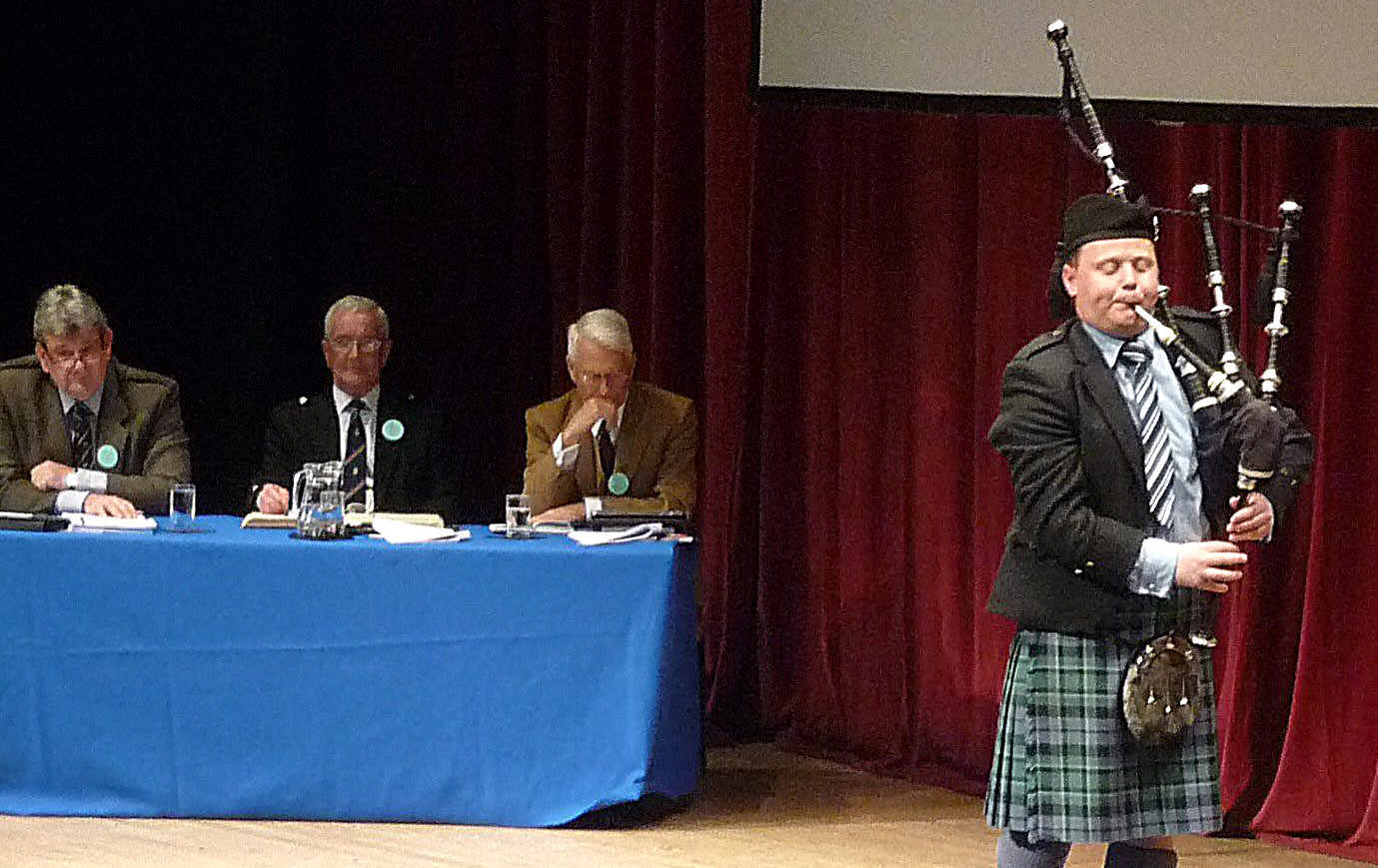
‘The proposal solves ALL of the problems of teachers judging pupils and indeed if it were to be adopted there would be no need any longer for any rules at all on the subject. The proposal is certainly a whole, whole lot better than the myriad of heavy – handed rules and regulations which have recently been adopted and that do absolutely nothing to help solve the problems in the future of teachers stopping teaching, of future judges not being able to judge at all, and of the friction and division caused by over-regulation. It allows all judges and all pipers to enter any competition whilst preventing judges having influence over pupils.
‘Both pipers and judges will make their own minds up and I do hope that those in approval of the proposal will let the leaders of CPA and SPJA know of their opinion. As to why, at the very least, both CPA and SPJA committees would not have forwarded the proposal for proper discussion to their members is completely beyond me, because as far as I can tell it has very significant support from both pipers and judges.’
Further reaction:






James MacHattie, Principal of the College of Piping PEI, Canada: ‘I am in full favour of this, and I believe it would fix more than just the principal issue. I will be curious to read if anyone is opposed to it, and even more so, why they would oppose it. Thanks, Colin!’
Nick Taitz: ‘This is a very good idea – it is essential that the best pipers be free both to teach and to judge, for a simple reason – you want the best pipers as judges, and the best pipers as teachers. Any rule which prevents this by making a piper choose whether to do one or the other is harmful.
‘This idea really works in terms of achieving the goal of letting pipers do both, while addressing perceived and actual biases in a very effective manner. I had written some years ago that we should just trust the judges, because losing the chance to have the best pipers teach and judge was a cost to be avoided above all else – but Colin’s suggestion does better in that it achieves this result, doesn’t rely on trust, and addresses both perceived and actual bias.’
Senior adjudicator Duncan Watson: ‘I have gone through umpteen permutations, totalling the points that my imaginary assessor judges might mark in their rankings of competitors excluding the ranking when there is a teacher/pupil association. It actually works and produces a result based on an assessment by each as compared with what often takes place on the judge’s bench – a result by consensus (some call it horse-trading).
‘The proposal provides a workable structure which addresses the thorny problem of teachers on a bench when a pupil is taking part, allowing the top pipers to both teach and judge.
‘The proposal is based on benches of three, but it is possible it could have value in benches of two as well. That a copy of the final grid with the result is to be held by the competition organiser – who has thus been informed of how the results are arrived at – is their right.’
Bruce Erskine: ‘In my opinion this sounds like a very fair and thought out plan. Solo piping needs the best judges possible on the benches.’
- To read Colin’s proposal in detail click here.