


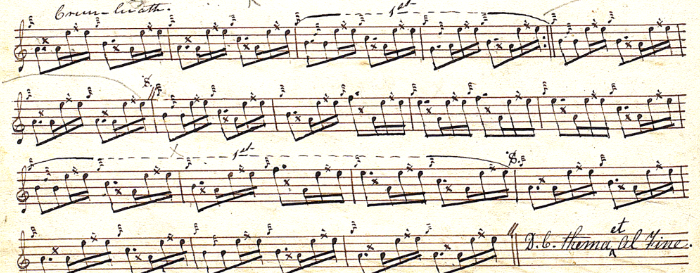
By Robert Wallace
This article concerns the crunluath motif written in the Piobaireachd Society’s collection, before the 2019-2025 revision, as:

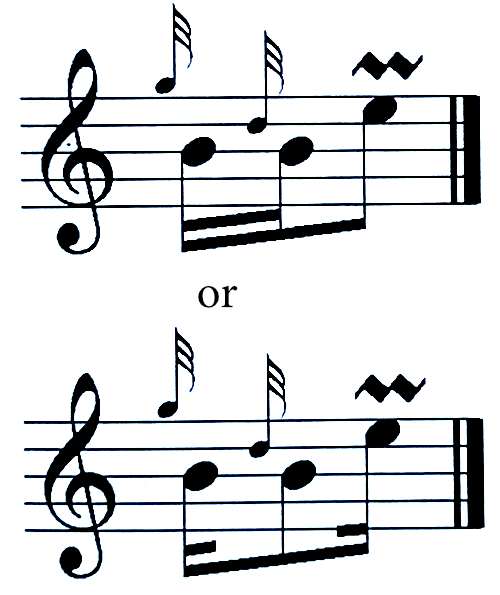
What follows I first wrote about 22 years ago. I raised it again at the at the recent Piobaireachd Society Judges Seminar when discussing the tune, the Pride of Barra.
The timing of this motif is important given that it features not only in the Pride of Barra – set for this year’s Gold Medal – but also in MacKay’s Banner, Gathering of the MacNabs and MacKay’s Short Tune.
The Gathering of the MacNabs has come down to us mainly from the Campbell Canntaireachd and is given in staff notation in Book 5, p149. The CC gives our motif as hioaodre, translated by the original 1934 editor, Archibald Campbell, as a doubling on B then a dre to low A. An extreme form of the second example above.






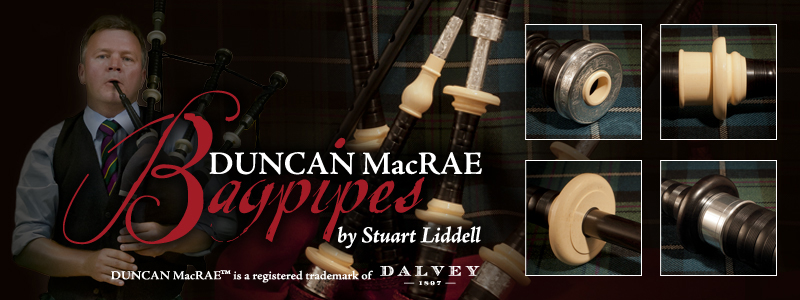
I find this awkward and clumsy to play. A stutter, it interrupts the flow of the variation and breaks with the rhythmical precedent set in the taorluath. However, help is at hand. If we look at ‘Binneas is Boreraig’ we find it given as:

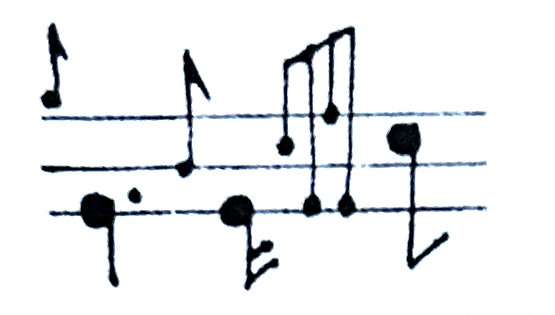
Surely a more musical portrayal which chimes with the taorluath. The Society’s old Book 7 version of MacKay’s Banner gives this turn, this time on C, as:

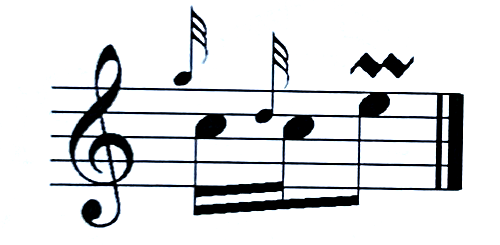
but Angus MacKay in his book has the much more satisfying:

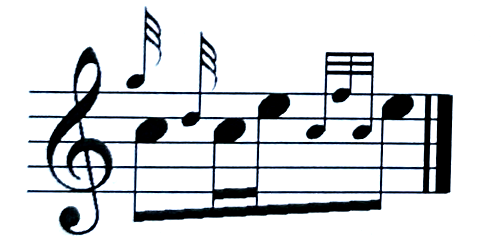
echoed again by Malcolm MacPherson and Dr Roddy Ross in ‘Binneas’ as:

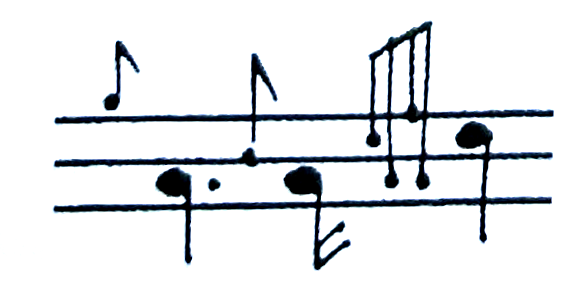
Moreover, they have support from Lt. John MacLennan (GS’s father) who published the same tune with:

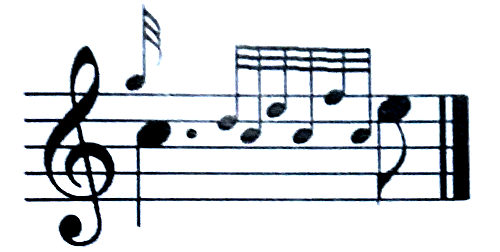
And in his collection, Ceol Mor, General Thomason gives the C turn in MacKay’s Banner as per Angus MacKay. Turning to MacKay’s Short Tune, in Angus’s MS we have it as:

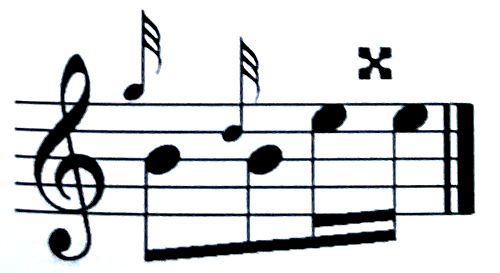
…..and the Piob. Soc. old version is not too far away depicting it as per the first example in this article. MacKay clearly did not intend the first two Bs to be played as a doubling, though the first two notes could be timed more evenly, without my preferred pointing on the first note. And Angus may have intended the dre, represented by a small cross in his MS, to have been played on low A, but I doubt this.
Going back to the Gathering of the MacNabs and its vocable hioaodre, it is perfectly possible to justify Kilberry’s interpretation, the only question on his reading whether the E and F grace notes of the dre were intended to be played on the low A or on B.
It could be seen either way, but surely musicians of discernment would prefer it as per Binneas. Strangely, in his Kilberry Book of Ceol Mor, Archibald Campbell seems to have hedged his bets a little by opening things up in MacNabs away from the ‘doubling on B method’ to a more rounded approach – perhaps a softening of attitude between the 1934 edition of Book 5, and the appearance of the Kilberry Book 15 years or so later. Note, though, that even with this rounding off, the E and F grace notes are on low A and not the C as I believe they should be.
It would be too easy to be critical of Archibald Campbell. In MacKay’s Banner he was clearly following what he considered traditional teaching from John MacDougall Gillies and Alexander Cameron. He is quite specific as to the timing of this turn in ‘Sidelights’ stating, ‘The two Cs practically make a doubled C as in a march’. He writes it as:

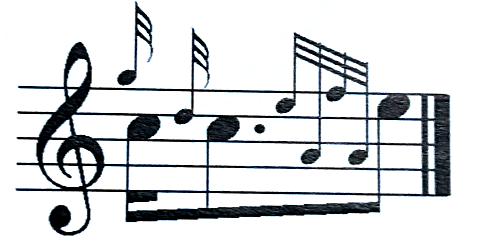
But that’s not how it appears in the Kilberry Book and it is difficult to understand how such a meticulous man as Archibald Campbell could have pushed on with his view – a lone voice against the wealth of contrary sources he must have been aware of. My thoughts on that are for another day.
We seldom hear this motif timed as it is shown in the older sources, pipers and their teachers taking a safety first approach and sticking with the ‘Sidelights’ style, generations of stutterers the result.
But when tackling these tunes, including the Pride of Barra, we need to consider the evidence described above for guidance on how this motif should be played – first note long and held open for the dre. This way it comes off the fingers more readily, more steadily and more pleasantly.