


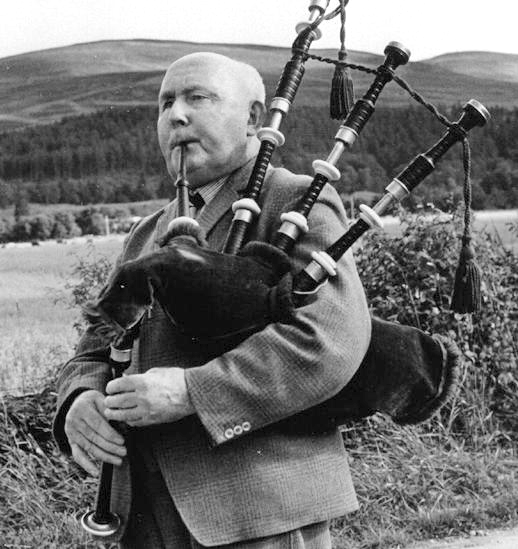
Recent Piping Press posts on the judging of solo piping led to a response from Mr Neil Mulvie in which there was reference to an unnamed piper whose playing was criticised by Bob Nicol.
The piper played the piobaireachd Beloved Scotland and apparently did not give enough value to the low A in the commencement to the tune and Nicol uttered the words, ‘he hasn’t got it’.
By Duncan Watson
This occasion was remembered by the late Norman Matheson who was accompanying Nicol on the bench. Norman related the story to me. The fault, as Nicol saw it, continued through the tune on the low A and low G notes.
I cannot recall if the unnamed piper featured in the prize list, but I think not. Bob was not inclined to favour pupils. You can read between the lines what that means.
Knowing Bob, and having got many tunes from him, he could be quite blunt about what his pupils produced and at times made comments such as, ‘I don’t care for that’, going on to explain his thoughts.
I certainly experienced this and am sure other pupils were treated the same. Personally, it did not offend me, maybe because I was used to being criticised in my old job as a policeman.











Bob Nicol, as we know, had an unshakable belief in what he learned from John Macdonald (Inverness). This would have greatly influenced his judging and teaching.
Nicol and Bob Brown attended John Macdonald for a good number of years, again well documented. In letters to Norman Matheson, James Campbell described John Macdonald as being rather ‘chameleon-like’. He played tunes in different ways, seemingly based on the different traditional sources from where he learned the music.
It is well documented by Dr Jack Taylor and Norman Matheson the methods by which Nicol and Brown taught. I suppose it is safe to say that everybody got the same treatment, but we would have our own memories of the lessons. Basically, it consisted of the tunes being sung to the pupil until the melody was grasped and for the pupil then to go home and get it onto the bagpipe.
The pupil returned and the teaching started properly using the pipes, with little or no reference to the practice chanter. The pupil would be conducted through the tunes, Nicol seated in an easy chair with the pupil closely watching his conducting.
Any tendency to use one’s feet in counting beats/pulses was not allowed. If the pupil failed to express notes properly Bob would maybe strike the arm of the chair and the passage would be repeated to get it right.
At times it was difficult to catch the tune as Bob wanted, but repeated efforts helped to achieve the desired effect. With the sessions over for a while there would be a cup of tea and maybe a dram. I would have arrived at his Deeside home about 2.30pm having dropped off my wife at Aboyne where my in-laws resided.
The sessions would continue into the evening and to loosen off there was often a bit of march playing and then back to the tunes. It was a standing joke with my wife and my in-laws that I would return to Aboyne nearing midnight with the house in darkness.
It was not a case of the tunes then being the finished article as the process of going through them never seemed to end. You soon realised that they were being built up into something of a study. This was a theme that Donald Morrison occasionally referred to in discussions with myself.
As regards technique, that was for the pupil to attend to. Of interest was that William MacDonald (Inverness) instructed me for some time prior to which I would have tried to play the likes of crunluath movements based on William Ross’s Book, a tattered copy of which we had at home in Dingwall.
I tried those movements and was sounding what I came to be told was the ‘redundant’ low A. I was informed by Willie that the leading pipers did not play the movements in that way and was corrected.
This brings me to Jimmy McIntosh’s ceòl mòr book, ‘In the Balmoral Tradition’. In early pages of the publication, there are instructions on the crunluath which Jimmy got from P/M William Young, Cameron Highlanders.
Bob Nicol never made any adverse comment on the way I played crunluaths. If I turned up and the likes of taorluath and crunluath movements were ropey, he would bluntly inform me and suggest/demand that they be tidied up.

I have a vivid memory of preparing the tune Isabel MacKay for the Gold Medal. I had played it before coming to Aberdeen and had based my interpretation on recordings I had obtained, one of which featured Malcolm MacPherson.
I played the tune to Bob and he enquired as to the source. He was not critical, but of course I sensed that this was to be re-addressed. One of the main differences was the crunluath breabach which I was playing ‘up’, although I was aware of the more standard approach to the timing.
Bob advised me that following different influences in timing could lead to ‘being at sea without a sail and rudder’. The tune was re-learned as taught by Bob and I think I was making a decent fist of it.
In preparation for the forthcoming Northern Meeting, I submitted it at a games. Bob was judging. It did not go very well and I might have strayed into my old habits. Well, after the event, Bob approached and his advice was in similar terms to, ‘you are not listening, you are all over the place with that tune’. He was very much to the point.
Bob later contacted me and enquired as to whether I would continue lessons with him, and of course I had every intention of doing so and he was happy with my attitude to his rebuke.
As an aside, there are pipers nowadays with technique and bagpipe sound beyond reproach and they clearly access recordings of tunes from various sources. It is clear that they are scraping about for information, rather than being taught properly. Nicol’s words ‘like a ship at sea without sail or rudder’ may be appropriate?
Bob was a very down to earth sort of person and while blunt at times, I found him to be pleasant and inspirational in his approach to teaching ceòl mòr.
As to judging, he dealt with pupils just like other players – and another thing that was clear, pipers with a competitive reputation were not in any way favoured.
Bob counselled that prizes did not always equate to good playing, something that seems to be misunderstood these days.
- Learn more about Bob Nicol and his teaching by accessing the ‘Masters of Piobaireachd’ recordings edited and produced by Robert Wallace and Norman Matheson for the Greentrax label. Click here.

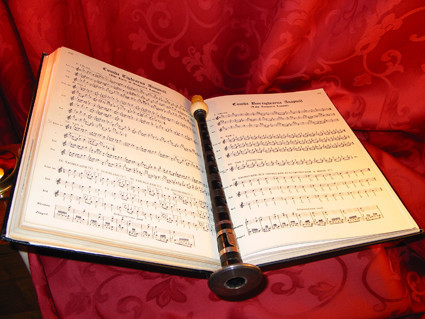
Classic Piobaireachd (Vol.3 M-Y): Lessons on Great Tunes
Another batch of the great tunes from the ceol mor canon. As before, each tune is played in full, without interruption, on the practice chanter by piobaireachd Gold Medallist Robert Wallace. This means that the student can play along whilst following the music and learn the subtle phrasing and expression so important in this music. There is no assertion that this is the only way to play these tunes. Need sheet music? All tunes available from the Piobaireachd Society shop https://www.piobaireachd.co.uk/shop