

Twenty years ago the RSPBA celebrated its 75th Anniversary. To mark the occasion the Association produced a special supplement for Pipe Band Magazine. It included this short history by former President Bob Black and Dick McGrory on the founding of the Scottish Pipe Band Association…….

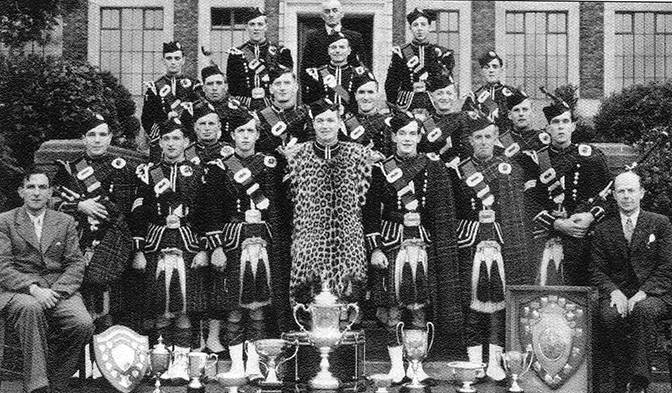
Big Oaks from Little Acorns – 75 Years of the RSPBA…. Pipe band contests are on record as early as 1905 and even in those days were considered to be outstanding events.
But whilst the bands were thrilled by the acclaim of the appreciative crowds in the arena and on the streets before and after the contests, at the end of the day they still remained individual units with little or no opportunity for meeting together.
They had no input into how the contests were organised and were no more than contributors to a great spectacle. A change for the better was necessary and the person with ideas on the matter was Pipe Major William Sloan of the Maclean Pipe Band.
On the return journey from the Cowal Highland Gathering in 1930, he broached the subject of a Pipe Band Association with two of his contemporaries, Pipe Major John MacConnacher of the Anchor Mills band in Paisley, and George McDonald of the Millhall band from Stirlingshire, two well-known and highly esteemed pipe majors at that time.

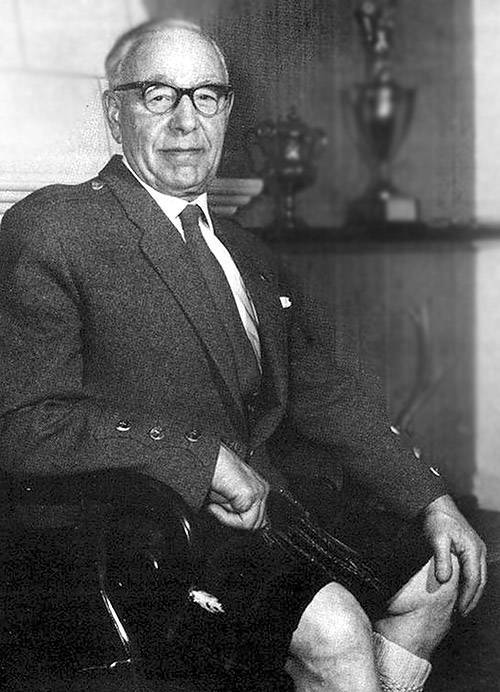
They promised to give their full support if Willie would launch it and lead the way. Willie invited interested bands to an exploratory meeting in Oatlands, Glasgow, in October 1930.
Those attending agreed that a Pipe Band Association should be formed forthwith. An interim committee was appointed with Willie as Chairman and Donald McIntosh of the Clan MacRae Society Pipe Band as Secretary.
A further meeting was held at the end of October 1930 at the MacRae Pipe Band practice hall. At this meeting an Executive Committee was elected. These pioneers were:
President: Pipe Major William Sloan, Glasgow
Vice-President: Hugh Diarmid, Dunfermline
Secretary: Donald McIntosh, Glasgow
Treasurer: Mr P Fowler, Leith
The newly-formed association very quickly arranged the bands into three grades: 1, 2 and 3 according to ability, and at the same time drew up machinery for annual reassessment.






The first contest run by the Association itself was held at Forthbank, Stirling, in June 1933. Ten bands competed in Grade 3 and 19 in Grade 2.
When one takes into account that pipe band contests from 1905 to 1933 were organised and run by promoters of mainly Highland games, it was no easy task to have the bands accept and adopt the contest rules of the SPBA. However by 1937 there were 42 bands in the Association.
At that time World Pipe Band Championships were held at the Cowal Games and the Cowal Committee set out the format and rules of the day.
The SPBA by now were well established in running contests and [following the resumption of competition after WW2] decided it was time to organise their own World Championships at a new venue.
One can only surmise the problems faced at such a move. The Cowal Committee were not only the first promoters of pipe band contests, but the Games were the largest of its kind.

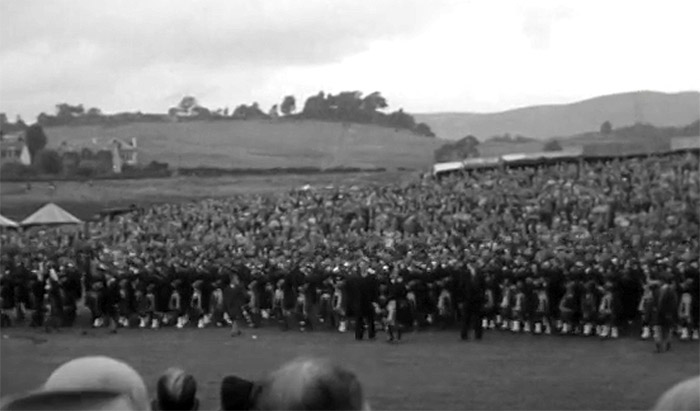
However, in 1947 the SPBA achieved their aim on behalf of their membership by staging their first World Championships [at Murrayfield] in Edinburgh sponsored by the News of the World newspaper.
First place in Grade 1 were Bowhill Colliery Pipe Band, Fife, under Pipe Major Chris Sutherland. After only 17 years the SPBA had now become the sole organisers of all pipe contests within the UK.
A closing note on this; it did not take the Cowal Committee long to accept the change and good relations soon returned. One can see this in the attendance of our member bands and supporters to this day.
[Unfortunately, 20 years on, Cowal pipe band competitions are a shadow of their former selves. The championship status granted by the SPBA as a concession to their losing the World Championship is no more and the number of bands attending is considerably less than in the heydays at Dunoon.]
Although the SBPA moved on to set up teaching facilities and membership had increased, accommodation remained a problem. The Association was still meeting where it could right up to the late 1960s.
- To be continued.

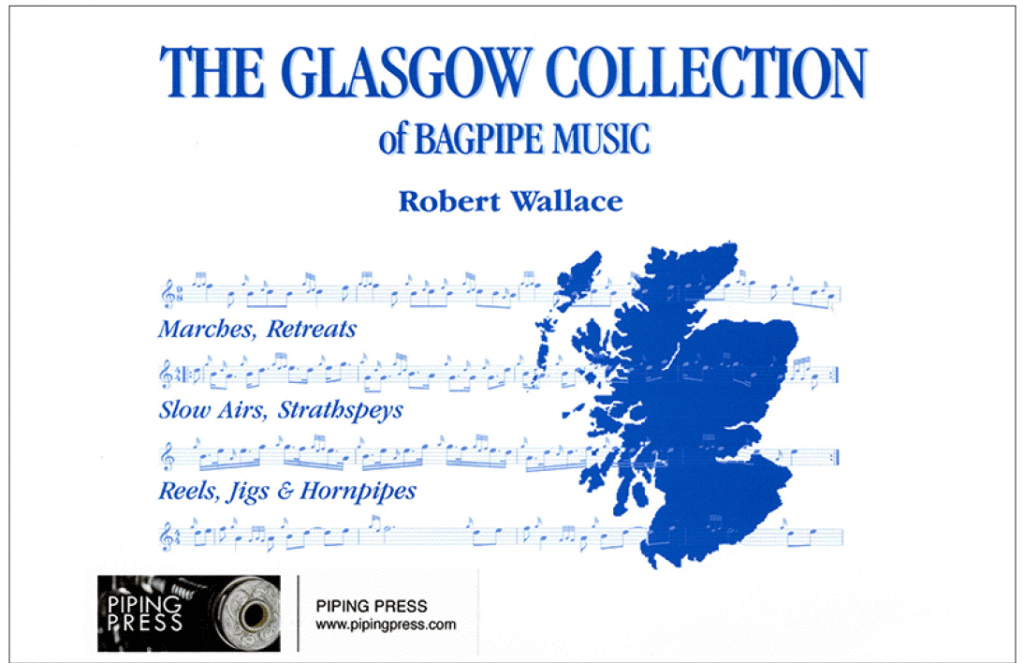
The Glasgow Collection of Bagpipe Music
Now in its fifth reprint, this book of ceol beag first appeared in 1986. Tunes are: Mrs John MacColl, James MacMillan of Victoria – British Columbia, William MacDonald – Benbecula, Men of Argyll, Detroit Highlanders, Dumgoyne, Peat Harvest, Captain Grant, Braemar ‘Wali’, A Parting Glass, Ancient Clan March, Kitty Lie Over, MacDonald of the Isles, Battle of Sheriffmuir, Wellfield, Dunaskin Glen, Wallace’s Farewell to Kuratau, Farewell to Muirheads, Loudon’s Bonnie Woods and Braes (air), Achmore Loch, My Brown Haired Girl,…