



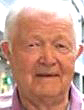
Donald McIntosh was Honorary Secretary of the SPBA from its inception in 1930 until 1938 and served a second term in the same role between 1950 and 1960. He was also President of the Association in 1946. Donald was a piper in Willie Sloan’s Maclean band and later in the Clan McRae band.
He was one of the SPBA officials who was deeply and centrally involved in the initial formation of the SPBA and he was later also involved in the negotiations which led to the formation of the Northern Ireland Branch in 1950.

By Alistair Aitken OBE,
Former RSPBA Historical Research Group Member
Research by historian Jeannie Campbell has identified that Donald McIntosh was born in 1888 and had a younger brother Peter and a sister Elizabeth. In 1901 the family stayed in St Rollox, Glasgow.
In March 1916, at the age of 28, Donald married Catherine Fraser at Ruchill United Free Church in Glasgow. At that time he was a Post Office sorting clerk and stayed in the city’s Couper Street.
Donald and Catherine had a daughter, Kitty, in 1917. Kitty, then in her 90s, provided the RSPBA Historical Research Group with the information about the Clan McRae band which appears in the history section of the Association’s website.


Robert Whitelaw
Robert was born in 1898, son of William Whitelaw and Janet Chapman who married in 1888. He was first cousin of the Wilson sisters (Helen, Mary and Sadie) from Stonehouse in Lanarkshire, well known lady pipers at that time.
Helen Wilson (later Helen MacPherson after her marriage) was also a composer of pipe tunes. The three sisters were regular prize winners in solo competitions at the leading Highland gatherings.






Robert Whitelaw served with the Cameronians during WW1 and was Pipe Major of the 9th Battalion. Later he was P/M of Lanarkshire’s Dalzell Pipe Band and was employed as a civil servant in the Ministry of Labour.
He was President of the SPBA in 1947 and from 1947 to 1949 served as Honorary Secretary. When things were slowly getting back to normal after the WW2 there was an upsurge in the interest in pipe bands, adding strength to the then SPBA. Ideas were being circulated that a Pipe Band College should be formed. This became a reality in 1947.
In 1948 Robert wrote down many of his thoughts on how the pipe band movement should develop. In a series of articles in ‘Pipe Band’ magazine entitled ‘Ancient and Modern’, he covered many aspects of that proposed development under headings such as: ‘SPBA and Why’, ‘The Panel of Judges’, and ‘What Constitutes a First Class Pipe Band Performance’.
Though these articles were quite controversial, they were very progressive for the time and helped influence development of the movement.


Robert was also prominently involved in resolving the dispute between the Association and Cowal Highland Gathering which led to the first SPBA World Pipe Band Championship (WPBC) at Murrayfield, Edinburgh, in 1947.
A year later he was also deeply involved in the similar negotiations to avoid a clash between Cowal Games and the WPBC, the latter eventually taking place a week after Cowal at Glasgow’s Scotstoun Stadium due to the unavailability of the Edinburgh Murrayfield venue.
In 1950 Robert Whitelaw moved to Crieff where he was manager of the local Ministry of Labour office. During the following years, until his retirement, he was honorary instructor at Morrison’s Academy CCF Pipe Band.
He was also the instructor at Crieff British Legion Pipe Band and a Director of Crieff Highland Gathering. Following his retirement he returned to Lanarkshire, where he passed away in 1965.
- Read the first excerpt of this history here.
Order your digital edition now…just click here or on picture….

Detroit Highlanders, Barlinnie Highlander… the list goes on…