



Piping Press recently published information about the formation in 1930 of the Scottish Pipe Band Association (SPBA), which we now know as the Royal Scottish Pipe Band Association (RSPBA), ‘Royal’ status having been bestowed on the Association in 1980.
Over the years the Association has undergone several changes, many of which are described in the, ‘How it all began; and the first 75 years’ booklet published by the RSPBA in 2007.

By Alistair Aitken OBE,
Former RSPBA Historical Research Group Member
What is missing in that booklet, however, is information about the many individuals who are no longer with us and who influenced or assisted in the development the Association to where it is today.
Over the next few weeks we will publish the history to date about as many of these individuals as it has been possible to identify or find detailed knowledge of.
Not surprisingly, it has proved difficult to find information about all leading the individuals who deserve to be mentioned and I apologise for any obvious omissions. Hopefully the series will encourage others to come forward with information to fill any gaps.


Pipe band competitions were held throughout Scotland and Ireland as early as 1905, many in association with traditional Highland Games. Competition was seen as an effective way of raising standards, but there was no proper regulation and few opportunities for bands to meet for the benefit of the further development of the music.
Stewart Gardiner of Wallacestone & District Pipe Band has helpfully provided information about a 1907 initiative by his band which saw the formation of what was referred to at that time as ‘the Scottish Pipe Band Association’. That must have been the first Association with that title. The membership comprised 16 pipe bands.






It is also known that there were early pipe band associations in Fife and the Lothians, probably with significant links to the mining industry. The Fife Free Press newspaper reported on a meeting of 27th September 1924 involving representatives of 16 pipe bands to consider the formation of a ‘Fifeshire Pipe Bands Association’.
Rules and regulations were drawn up and officials appointed. It seems that the Association played an active part in contests throughout Fife and it was still in existence in 1929 when it ran a competition involving the Cowdenbeath, Lochgelly, Kelty and Blairadam, Hill o’ Beath, Dunfermline City, Barry Ostlere and Shepherd, Kirkcaldy, Tayside, Newburgh, and Bowhill & Lochore pipe bands.
It is also known that a Lothian and Borders Pipe Band Association was formed in 1936 by P/M Mathew Scott of the Newbattle Colliery band. It had headquarters in Edinburgh and its President was the legendary Jimmy Catherwood of Edinburgh City Police. The L&B Association presumably was subsumed into the SPBA branch of the same name when it was formed in 1939.

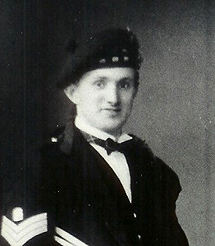
As we know, none of these associations still exists and it is possible that their demise was something to do with the reductions in manpower during and after the two World Wars.
It was on the ferry returning from the Cowal in 1930 that P/M William Sloan of the Glasgow-based Maclean band, sitting with P/Ms John MacConnacher of Paisley’s Anchor Mills, and George McDonald of Stirlingshire’s Millhall, broached the subject of a national pipe band association.
These were prominent and highly esteemed Pipe Majors of that time. There was unanimous agreement; the idea was highly commendable and consequently over the next few weeks Willie Sloan invited interested pipe bands to an exploratory meeting in Oatlands, Glasgow.
There it was agreed unanimously that an Association should be formed forthwith. An interim Committee was appointed with Willie as Chairman and Donald Mclntosh of the Clan McRae Society band as Secretary.
Constitution and rules were formally adopted and the SPBA was formed in 1930 with the same two individuals as President and Hon. Secretary respectively. As the SPBA gradually evolved it became UK-wide and grew into the RSPBA we know today.
- Next in our series: P/M Willie Sloan.
Order your digital edition now…just click here or on picture….

Detroit Highlanders, Barlinnie Highlander… the list goes on…