



Thanks to an invite from Robert Mathieson and John Reville, I was able to spend a couple of hours sitting in on last Saturday’s RSPBA judges’ online seminar.
There were 62 participants, a mix of adjudicators and leading pipers and drummers. The subject was ensemble, something that has featured over that past while in these pages. Much of what I heard and saw was new to me, eye-opening even.
By Robert Wallace
And I can say this to all bands looking forward to the coming season: this seminar demonstrated beyond question that your judges are extremely well-informed and conscientious to a fault.
Everything was gone into to the nth degree. What was ensemble, how do you judge it? Why are 2/4 marches different when they open a medley than in an MSR?
Mention was made of a Captain John MacLellan quote: ‘Competition marches are true bagpipe music and a product of the piper’s art ……..
‘Above all study of the tune’s melody is most essential to reveal the lights and shades which put the artist above the technician…’ Good advice for all judges, band or solo, ceòl beag or ceòl mor.

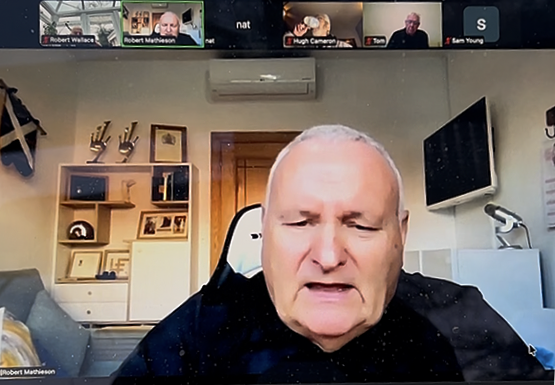
Ultimately passion was the key in all ensemble assessments. Robert Mathieson drew the analogy of the football crowd singing the club anthem at Liverpool. The hairs stood on the back of the neck as 50,000 voices sang ‘You’ll Never Walk Alone’.
But wait a minute, the unison was terrible, the tuning was all over the place….yet you could not deny the passion. Here was a lesson for pipe band adjudicators.
For solo judges too I would say. Passion and feeling should trump a wrong note or minor blemish all day long.






Robert pointed out the significant increases in band sizes. In the past two decades piper numbers had gone up from around 15 to 20, a 31% increase; side drummers from around 7 to 10, a 38% increase; and the number of tenors by 133%.
At the Q&A I felt tempted to weigh in about the adverse side of this growth (the drop in the number of bands), but felt it would have detracted from the central theme of the discussion – how to judge ensemble.
One judge did make the point that the adjudicators panel had encouraged a lot of bands to build up their mid-sections, ensemble demanding variety and interest. But was this really necessary? He noted at an MSR competition one drummer had only nine mallet-to-drumhead contacts during the whole performance – and seven of them were ill-timed.
The last module I heard was on the importance of judges making their crit sheets meaningful and easily understood. They had a commitment to create a response to a performance and to ensure that these written responses were legible, brief and used appropriate language. Said sheets had to be informative, constructive, advisory and consistent.
In summary, I must credit Robert Mathieson and his team for allowing outsiders like me an opportunity to examine their work. This new transparency in the sometimes arcane dealings of the Adjudicators Management Board was most welcome. It showed the confidence board members and management have in how they go about their business.
Greater respect for judges and faith in their processes can only grow from this willingness to throw their doors open to the media and thus to the wider pipe band fraternity.


‘Highland Bagpipe Music’ by Donald Morrison – digital book
This book was first produced shortly before Donald died in 1988. Languishing out of print, it surfaced in 2021 following contact between Piping Press editor Robert Wallace and Donald’s daughter Sheona. Sheona agreed that it should be offered to the piping public once more at nominal cost, the aim being to preserve her father’s musical legacy. Donald Morrison was the complete piper a fine teacher, composer and soloist. He won the Gold Medal, the Bratach Gorm and many other top…